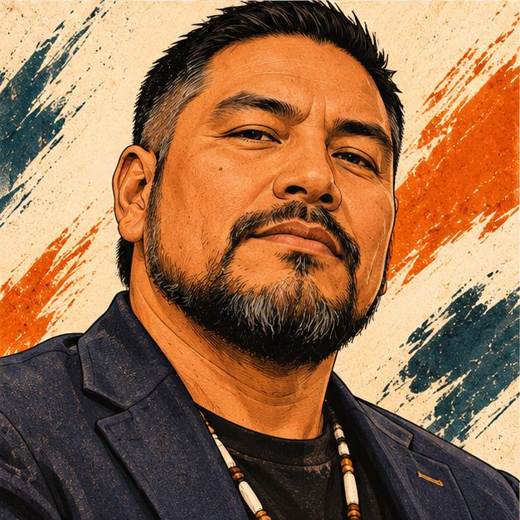
Streetwear is sometimes treated as disposable culture. Justin Jacob Louis has spent years making an argument for the opposite: clothing can carry memory, place and contemporary design without becoming a museum piece.
A member of Samson Cree Nation, Louis built SECTION 35 as an Indigenous streetwear platform that incorporates visual references connected to his Nehiyaw identity. The brand emerged in the mid-2010s and grew into collaborations, editorial recognition and collections shown far beyond its original audience.
When a label becomes a language
The details of SECTION 35's collaborations reveal the breadth of the ambition. The company's official history documents a Roots partnership for the 2024 Indigenous Fashion Arts Festival and later work connected to Arc'teryx's Walk Gently program. Those projects aren't proof that every Indigenous designer has access to the same opportunities. They demonstrate what can happen when an independent design practice develops its own recognizable visual language.
Louis's newer, eponymous menswear collection, formally launched in 2026, shifts the focus toward elevated wardrobe pieces. The through-line remains storytelling: material, cut and design are used to express where the designer comes from without limiting where the clothes can go.
Building reach without losing the source
It's easy for fashion coverage to focus only on celebrity placements and the price tag. The harder—and more interesting—story is how designers sustain a company across seasons. Production, retail, collaborators, creative ownership and cultural responsibility all have to coexist.
For anyone building a small fashion label, the SECTION 35 story is less a shortcut than a case study: work on the design, build the relationships, understand the business and be deliberate about what the brand represents.
A T-shirt became a design company
Justin Jacob Louis is from Samson Cree Nation, on Treaty 6 territory. He started by designing T-shirts and reworking familiar visual references around 2014. SECTION 35 launched online in 2016 and grew into a recognizable Indigenous streetwear label with a distinct graphic vocabulary and a storefront presence.
The point of the brand was never only to print clothing. In interviews Louis describes using fashion to tell stories and create something his communities could see themselves in. Streetwear has always been a language of identity; SECTION 35 demonstrates that Indigenous designers can shape that language themselves.
From local scene to major institutions
SECTION 35’s history includes work shown in the Metropolitan Museum of Art exhibition In America: A Lexicon of Fashion, appearances at Indigenous Fashion Arts and the White Milano trade show, and collaborations with Roots and Arc’teryx’s Walk Gently project. These are consequential invitations because they place Indigenous design inside spaces that influence wider fashion conversations.
Louis has also built an eponymous menswear label, making a formal 2026 launch of its first collection after earlier runway presentations. The two ventures suggest different approaches: one rooted in accessible streetwear culture and another focused on luxury garments, but with a shared design philosophy.
What growing actually requires
The company’s own history describes online launches, seasonal releases, collaborative campaigns and a retail storefront in Chilliwack. None of those are automatic outcomes of a compelling logo. They require inventory, distribution, relationships, photography, customer trust and the ability to keep a creative idea coherent at commercial scale.
That makes Louis an interesting business profile as well as a fashion story. The questions for a future interview are practical ones: how does a founder scale without losing creative control, and how do collaborations with major brands change the resources available to the next Indigenous designer?
Hear it. See it. Follow the work.
A profile is a starting point. Experience the actual song, performance, release or project through the creator’s own channels.
Reported from credited public interviews, company biographies, festival or institutional records and published filmographies. Vibe Tribe did not conduct an exclusive interview for this story.